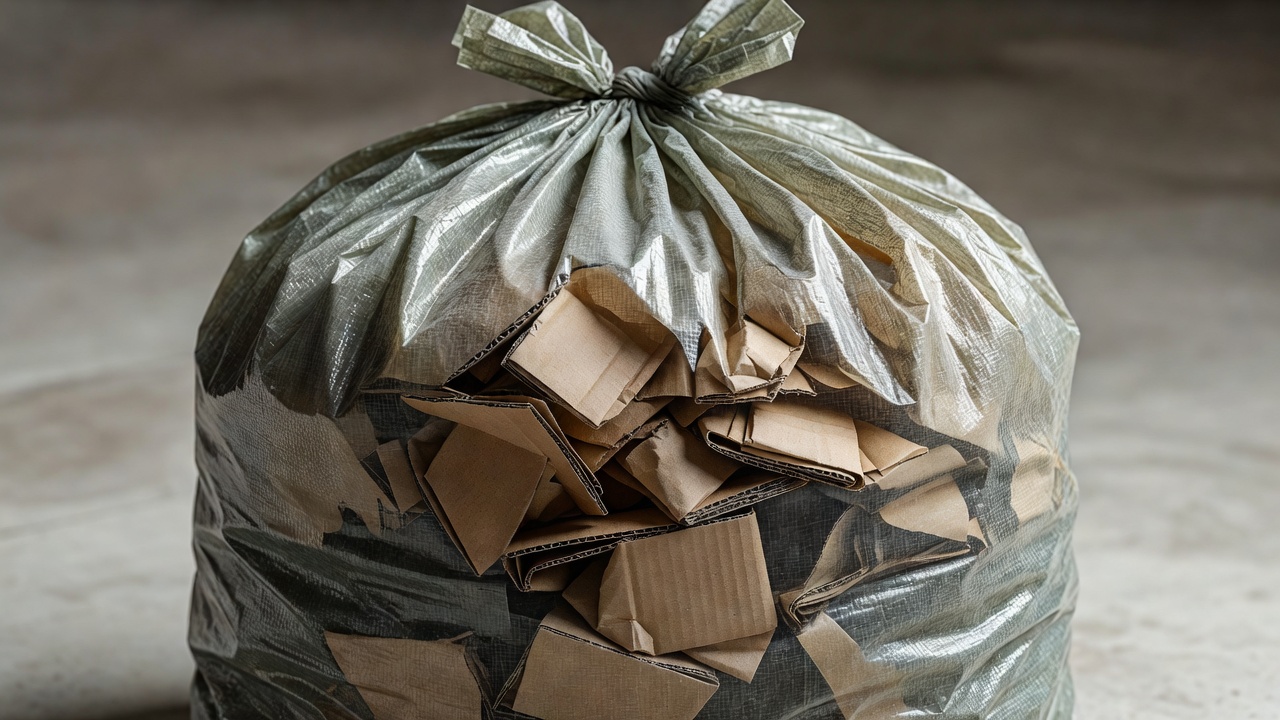
How packing waste reaches wildlife
Most packing waste that harms animals does not get there by intent. It escapes: from an overfilled recycling box on a windy morning, from a bag split by a fox or gull, from a collection vehicle, or from a doorstep where a delivery was opened and the fill left behind. Light materials — film, foam pellets, shredded paper — travel furthest. Bird conservation organisations such as the RSPB in the UK and the Cornell Lab of Ornithology in the US have documented birds entangled in loops of plastic, string and netting, and birds incorporating litter into nests.
Two hazards are worth separating. Entanglement comes from loops and long strands: strapping bands, cable ties, mesh sleeves, ribbon and string. Ingestion risk comes from small fragments that resemble food, which is more common with plastics and foams. Paper is generally less persistent outdoors, but we avoid describing any packaging as harmless; the safest piece of waste is one that never leaves the bin.
A simple containment routine
- Open parcels indoors or in a sheltered spot where fill cannot blow away.
- Gather all loose fill immediately and fold it into the emptied box.
- Cut any closed loops — straps, ties, elastic bands — into single strands.
- Bag film, foam and small plastic parts together before discarding.
- Flatten boxes so recycling containers can close.
- Put containers out close to collection time, not the night before in high winds.
Disposal routes and what to check
Route: kerbside paper and card
Most areas collect clean, dry cardboard and paper. Many ask for tape and labels to be removed where possible; others accept small amounts. Shredded paper and tissue are excluded in some places. Check your council or municipality page and keep paper inside a closed container or tied bundle.
Route: store drop-off for film
Flexible plastics like mailer bags and bubble film are collected at some supermarkets and through certain kerbside pilots. Only clean, dry film is accepted. Keep it bagged inside your home until you take it.
Route: general waste
Laminated envelopes, release liners, mixed-material tape and items your area does not recycle belong here. Seal the bag well. General waste is not a failure; it is the right route when recycling is not available, and a sealed bag keeps fragments contained.
Route: polystyrene and foam
Expanded polystyrene crumbles easily. A few recycling centres accept clean blocks; loose pellets rarely. Starch-based loose fill may dissolve in water, but only dispose of it that way if the manufacturer and local rules allow. Bag it securely otherwise.
Route: compostable items
Items certified for industrial composting need facilities that accept them. Putting them in garden waste or home compost without confirmation can contaminate those streams. If unsure, general waste is the safer route.
What senders can control
Senders cannot control the recipient's bin, but they can shape the waste that arrives. Choosing large-format paper over shredded fill, avoiding unnecessary plastic strapping, using paper tape instead of plastic tape where it works, and leaving out decorative ribbon all reduce the number of loose, tangling or fragmenting items. Including a short, specific disposal note helps more than a logo or slogan. Guidance on environmental claims, such as the UK Green Claims Code and similar consumer-protection rules elsewhere, expects claims to be clear and substantiated, which suits a practical note far better than a promise.
Outdoors and in shared spaces
Apartment blocks, workplaces and market stalls often share large open bins that birds and other animals visit. If you handle many parcels in such a setting, keep a lidded container for packing waste and empty it into the main bins in tied bags. Businesses receiving pallets should cut stretch wrap and strapping into short lengths before disposal and keep them in closed skips.
If you find litter
If packaging waste has already escaped, collect it with gloves and bag it. If you find an entangled or injured bird, do not attempt complex handling yourself; contact a local wildlife rescue or, in the UK, the RSPCA, or the relevant wildlife authority where you live.
For ways to reduce the waste in the first place, read Reduce Waste Without Guesswork.